
3D Cone Beam and 3D Dental Scans Glendale, CA
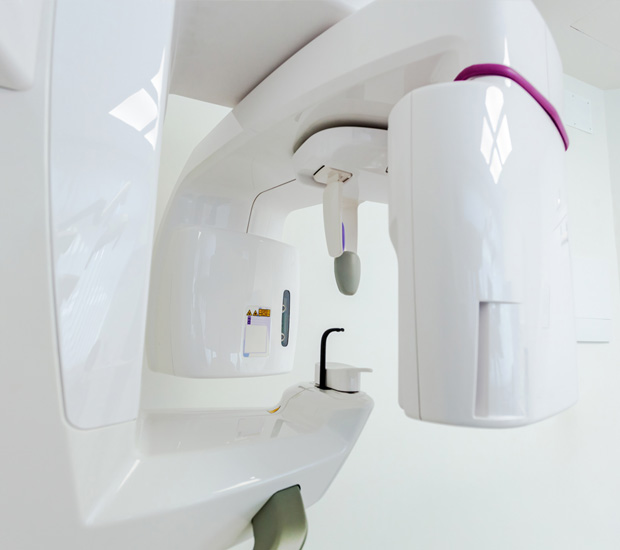
Advancements in dental technology have brought about many new tools that make it easier for dentists and more comfortable for patients. Dental cone beam computed tomography (CBCT), a new type of X-ray equipment, allows dentists to see a clear, detailed, three-dimensional image of the mouth without causing pain to the patient. This 3D imaging system takes full photos of the teeth, soft tissues, nerve pathways, and bones in a single scan.
Cone beam dental scans are available at Esthetix Dental Group in Glendale and the surrounding area. Our staff can help you learn more about the procedure you are undergoing and answer any questions you have about 3D imaging. Call us at (818) 638-0686 to schedule a consultation appointment today.
What to Expect From the Procedure
During a 3D dental scan, the patient must rest their chin on a platform and tilt their head forward against a frame so that they can remain stationary. The patient may also wear a lead apron shield. Then, an X-ray arm will make a rotation around the patient's head, collecting 2D images via a cone beam. The computer will instantly reconstruct these images into a 3D visualization that the dentist can review. The entire process is non-invasive and will generally take less than half a minute.
“These images will be instantly reconstructed into a 3D visualization that the dentist can review.”
Differences Between Traditional and Cone Beam
Traditional CT scanners and cone beam CT scanners both undertake the same basic function, but technical differences set them apart.
Traditional CT Scans
A traditional CT scan takes several pictures of internal body structures from multiple X-ray images generated by a computer. Atlantis, a radiology equipment company, explains, "The x-rays utilize radiation from a radioactive contrast injected into the body to create cross-sectional images." Traditional CT scans can offer a variety of benefits, primarily for surgeries and diagnostics.
Cone Beam CT Scans
Cone beam scanners use a cone-shaped beam radiating from an X-ray source, covering a wide range with just a single rotation around the patient's head. The X-rays are compiled using a series of algorithms to furnish high-resolution 3D images. Cone beams use a fan beam, as opposed to a light beam, and emit 200-300 times less radiation.
“The X-rays are compiled using a series of algorithms to furnish high-resolution 3D images.”
What Information Can Beam Imaging Provide?
A 3D cone beam CT scan can provide detailed information about the structures of the mouth. It provides a much more robust picture of soft tissues than a traditional dental radiograph. In this way, 3D technology can help the dentist obtain clinical information that they would not otherwise be able to use. The information that complete health dentists receive from 3D dental scanning can:
- Help them visualize abnormal or problem areas
- Evaluate structures of the jaws and face
- Diagnose trauma or dental cavities
- Plan for procedures such as dental implants, root canals, or cleft palate repairs
“In this way, 3D technology can help your dentist obtain clinical information that they would not otherwise be able to use.”
Check out what others are saying about our dental services on Yelp: 3D Cone Beam and 3D Dental Scans in Glendale, CA
What to Expect Post-Procedure
After a 3D dental scan, the complete health dentist will have a clear and concise three-dimensional image of the teeth, mouth, jaw, neck, ears, nose, and throat. The dentist will be able to immediately review this image and use features such as zooming and rotation to get the best possible view of any area in question. There is no recovery time after this procedure, and the patient will be able to immediately return to their daily activities.
“The dentist will be able to immediately review this image, and use features such as zooming and rotation to get the best possible view of any area in question.”
Questions Answered on This Page
Q. What is the difference between traditional and cone beam scanners?
Q. What to expect from the 3D cone beam procedure?
Q. What information can beam imaging provide?
Q. What should I expect post-procedure?
People Also Ask
Q. What does the dentist look for in a dental examination?
Q. How do lifestyle choices affect dental health?
Q. What should patients do if they have sensitive teeth?
Q. How can I find out if my employer's plan covers dental treatments?
Frequently Asked Questions About 3D Cone Beam Scans
Q. How long do 3D dental scans take?
A. Not very long. A 3D dental scan comprises one rotation of a mechanical arm around your head. After you are positioned, the scan itself usually takes less than 30 seconds.
Q. How long have dentists been using 3D scanning technology?
A. According to the FDA, CBCT technology has been in use for twenty years. Dental scans are becoming more common every day because of their helpfulness in planning for procedures and diagnosing complex conditions.
Q. How much radiation does a 3D scan emit?
A. A 3D dental scanner is considered a computed tomography (CT) scan. Still, it emits less radiation than other conventional CT scans that are commonly used in medicine. However, a CBCT scan does emit more radiation than traditional dental x-rays.
Q. What do patients think of 3D cone beam scanning technology?
A. Patients are often impressed to see a three-dimensional image of their own maxillofacial region. When the dentist can show a patient how a procedure works on their actual mouth and jaw, it helps them have a deeper understanding of the work. Then, patients are more comfortable with the procedure and even have an easier time explaining to others how it works.
Q. What is a 3D cone beam scanner typically used for in dentistry?

Scan here to view this page, 3D Cone Beam and 3D Dental Scans, on mobile

Dental Terminology
Learn More About 3D Scans Today
If you are looking for more information pertaining to complete health dentistry or the use of 3D cone beams or 3D dental scans, call us at 818-638-0686.
Helpful Related Links
- American Dental Association (ADA). Glossary of Dental Clinical Terms. 2026
About our business, license, and website security
- Esthetix Dental Group was established in 2015.
- We accept the following payment methods: American Express, Cash, Check, Discover, MasterCard, and Visa
- We serve patients from the following counties: Los Angeles County
- We serve patients from the following cities: Glendale, Burbank, Pasadena, Hollywood, North Hollywood, Universal City, La Crescenta-Montrose, Eagle Rock, Altadena and Toluca Lake
- CA (License #60395). View License Information and Specifics
- National Provider Identifier Database (1275817074). View NPI Registry Information
- Norton Safe Web. View Details
- Trend Micro Site Safety Center. View Details

Scan here to open directions to Esthetix Dental Group on mobile
Back to top of 3D Cone Beam and 3D Dental Scans
Related Posts
Implant Crowns Vs. Traditional Crowns: What Patients Should Understand
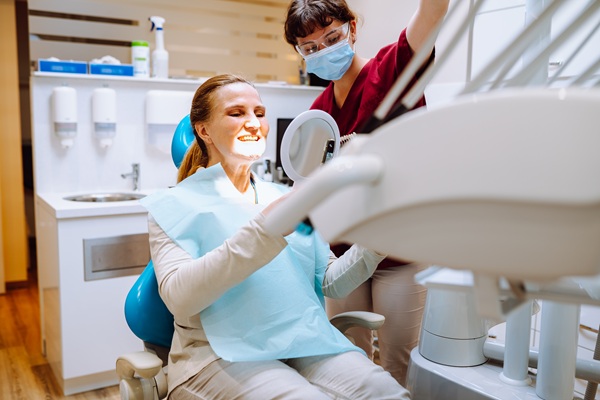
Patients comparing implant crowns and traditional crowns often want a clear, practical explanation. Implant-supported crowns replace a missing tooth by attaching to a dental implant, which functions as an artificial tooth root placed in the jawbone. Traditional crowns cover and reinforce an existing natural tooth after decay, fracture, or a large filling. Both restore shape,…

What You Can Expect From Gum Contouring By A Cosmetic Dentist
Cosmetic dentists know that a beautiful smile goes beyond the appearance of the teeth. When too much of the gums show through when smiling, even perfect teeth can appear unusually short or small. Similarly, an uneven gumline may create an asymmetrical look that detracts from an otherwise beautiful smile. If you are unhappy with how…
Common Issues With All-on-4 Implants And How To Avoid Them
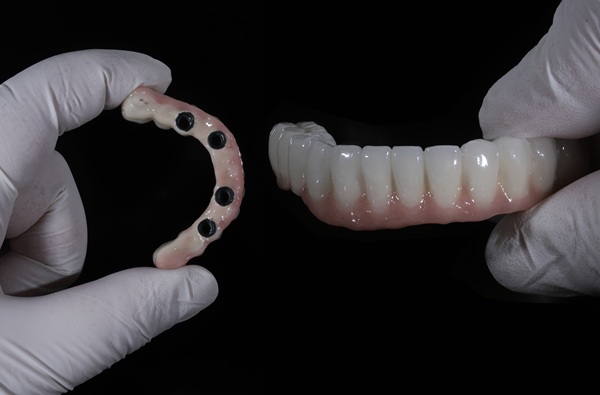
All-on-4® dental implants provide a sturdy and efficient way to replace a full arch of missing teeth. However, long-term results depend on careful planning and consistent maintenance. Reading up on the most common issues with this restoration can help you avoid them. That way, you can get a full, beautiful smile that lasts with all-on-4.All-on-4…
Explore additional topics covered on our website:
Call Us Today

Scan here to call Esthetix Dental Group on mobile